Chikkaballapur has a huge number of Reverse Osmosis plants(~400 plants) that have been used to combat the problem of water fluoridation and subsequent flourosis.
When we started we started looking at how groundwater was being used and explored the various issues surrounding the use of water in Chikkaballapur. As we explored various interactions and flows that affect water quality, life expectancy, health, soil quality, groundwater reserves- we started to see a problem that could emerge from the extensive and urgent use of Reverse Osmosis plants.
RO plants are bringing up water from groundwater reserves and by nature of the purification process are wasting a large amount of water. This volume of reject water depends on many different things like TDS, membrane quality, etc. Anecdotally, we heard atrocious ratios like 1:10 (filtered water:reject water). The process of RO purification by nature means that the TDS value of the reject water is much higher than the input from the borewell. Where the wastewater is disposed depends on the land that it is situated. Most often this water is let into the land or the drain, where it may percolate to the aquifer or evaporate and leave salt residue on the soil. This could lead to the destruction of livelihoods that depend on agriculture in the future.
Another consequent effect is the extensive extraction of groundwater which leads to deeper and deeper borewells being dug every dry season. This may lead to more fluoridation due to deeper reserves.
How we went about it
We started off thinking about how dependency on RO plants can be decreased at a state-level. As we progressed further, the potential for INREM to bolster their advocacy in this area was also explored. Through various iterations, feedback from Akshay Roongta(Ooloi Labs) and Kiran(INREM coordinator for Chikkaballapur) the team decided to make a prototype that could inspire ground level practices to preempt the disastrous effects of this vicious cycle. This prototype was to be version 0 where we could quickly rig something up and test it on field.
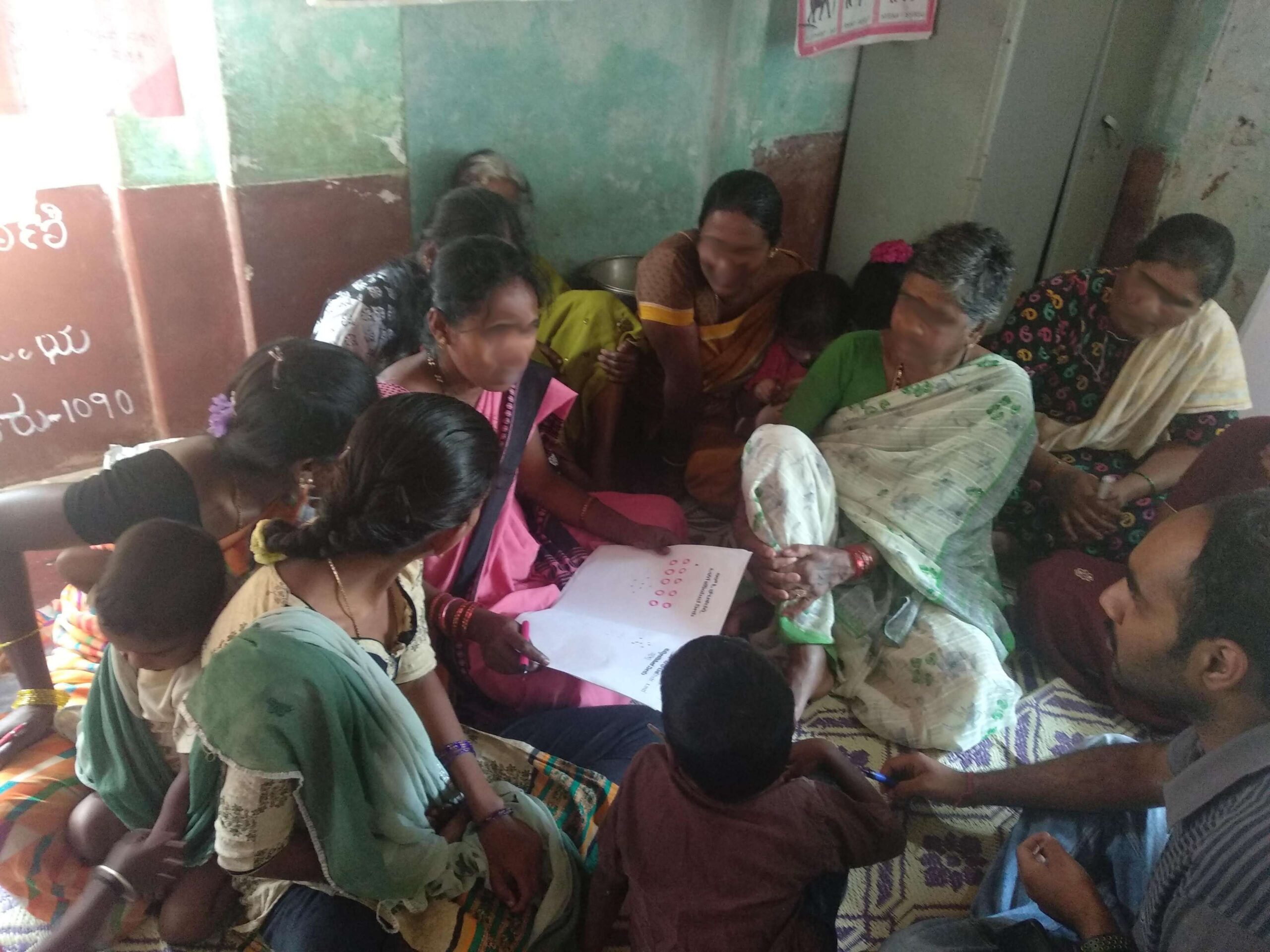
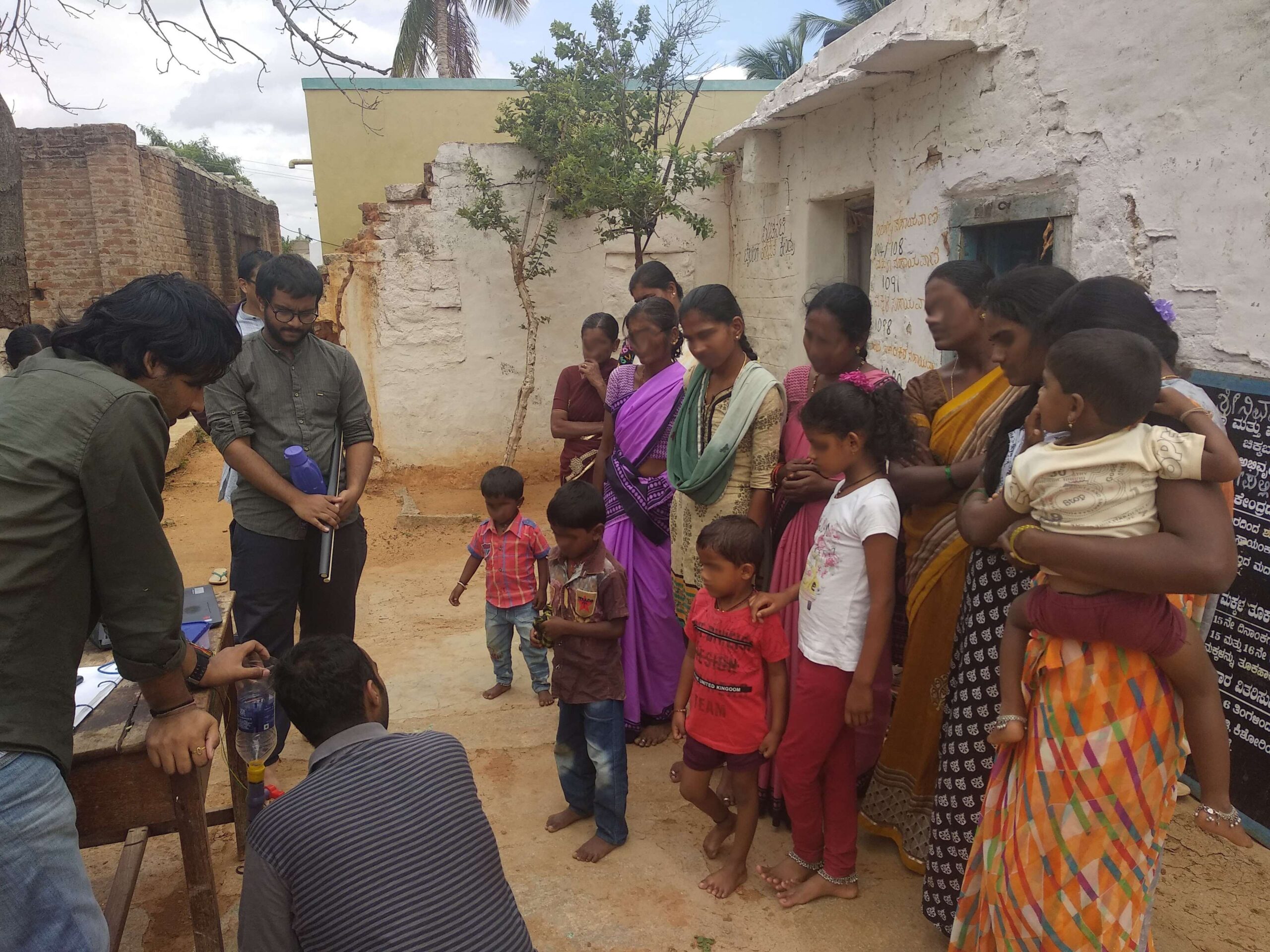
The nature of this activity meant that there were only three days for the conception, execution and testing of the intervention. This meant that the testing phase had to be reoriented to act as a research probe and hopefully inspire the community to co-speculate a preferred future.
The research probe- our prototype was then reoriented to tease out notions about groundwater and the nature of fluoride in water. However, version 0 worked in a different way to show the community that there were unseen cycles that would affect them in the medium-to-far future.
What was the prototype
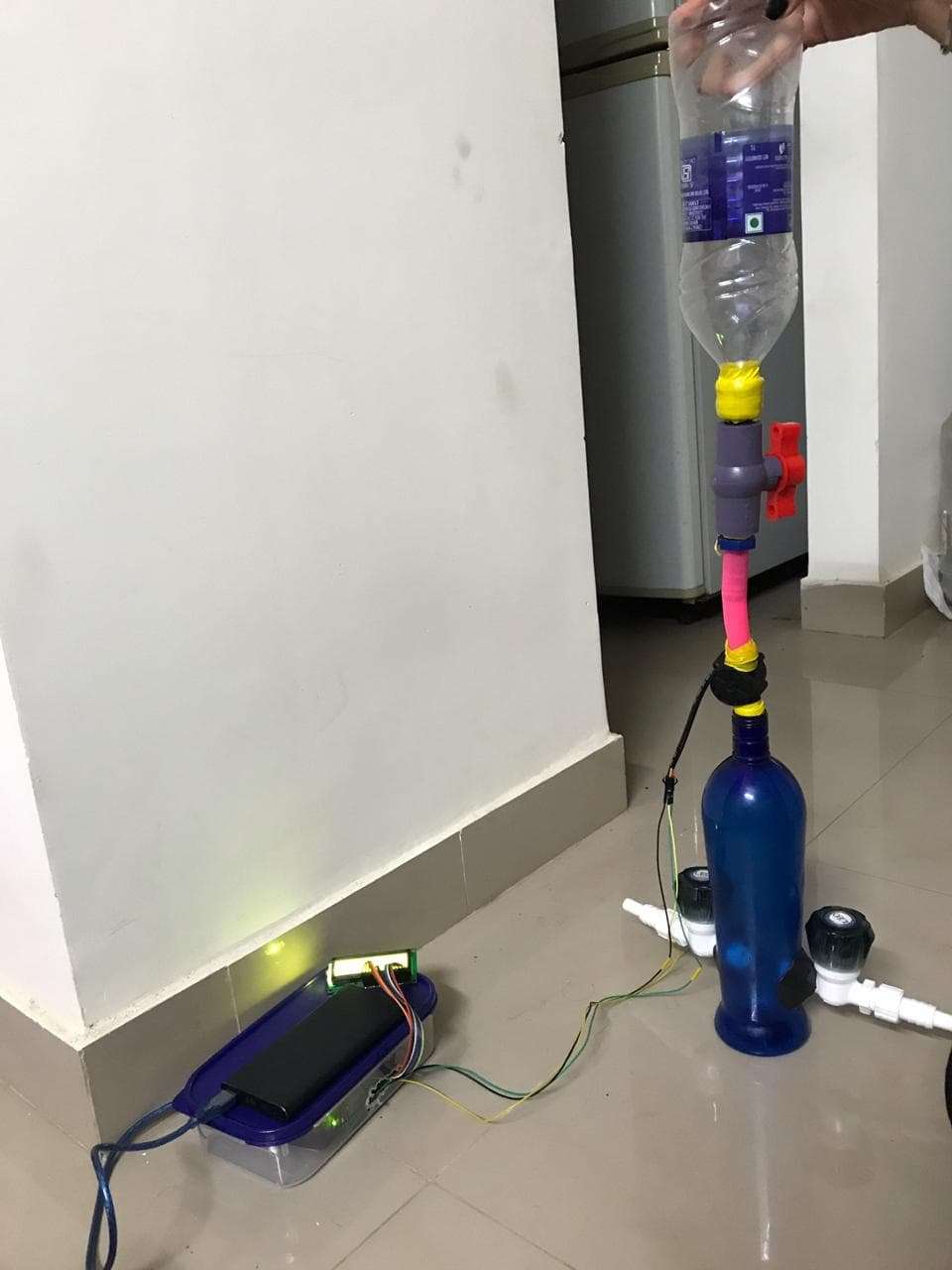
We hypothesized that simply making the data about the flow of water in and out of the RO plant available to the community which uses the plant would be further our vision of exposing those vicious invisble cycles. We created a prototype that measures the volume of water and the quality of water (using TDS measure as a proxy for quality). The visualisation of this data was designed to be contextual in terms of visual language.
The activity was successful in teasing out some interest in the invisible reject water and organising practices around it. Where the probe failed was in talking more deeply about the ideas that communities had about water and its fluoridation. But this probe has the potential to bring out different perspectives and ideas around groundwater. We are hoping to make an iteration of the probe for INREM with a discussion guide that can be used by the frontline workers.